
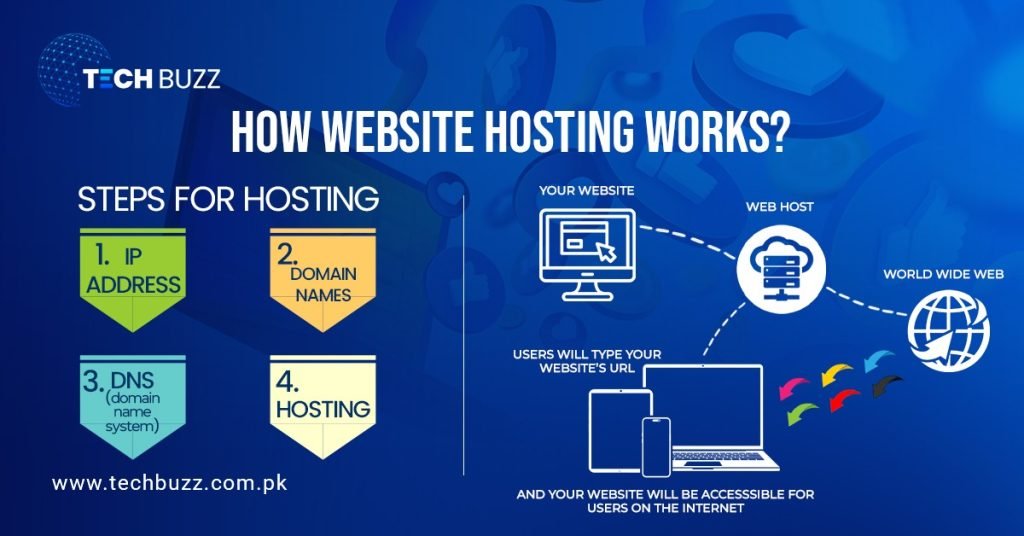
Web hosting and domain services are fundamental components of establishing an online presence. Whether for personal blogs, business websites, e-commerce stores, educational platforms, or professional portfolios, every website requires a domain name and a hosting service to be accessible on the internet. As businesses increasingly move online and digital marketing becomes more important, understanding web hosting and domain services has become essential for entrepreneurs, organizations, and individuals. Choosing the right hosting provider and creating a well-designed website can significantly influence a website’s performance, security, user experience, and overall success.
Domains
A domain name is the unique address that users type into a web browser to access a website. It serves as the online identity of a business, organization, or individual. Instead of remembering complex numerical IP addresses, users can easily visit websites through memorable domain names such as example.com or businessname.net.
Domain names consist of two primary parts: the name itself and the domain extension, also known as the top-level domain (TLD). Common TLDs include .com, .org, .net, .edu, and country-specific extensions such as .uk, .ca, or .pk. Selecting an appropriate domain name is an important step in building a successful online presence because it influences brand recognition, credibility, and search visibility.
A good domain name should be simple, memorable, easy to spell, and relevant to the website’s purpose. Businesses often choose domain names that closely match their brand names to improve customer recognition and trust. Domain registration is typically performed through accredited registrars, and ownership must be renewed periodically to maintain control of the domain.
In addition to branding benefits, domain names contribute to professional credibility. Customers are generally more likely to trust organizations with dedicated domain names than those relying solely on social media profiles or free website addresses. As a result, domains are considered valuable digital assets for businesses and individuals alike.
Web Hosting
Web hosting is a service that stores website files and makes them accessible to users through the internet. Hosting providers maintain servers that store website content, including text, images, videos, databases, and applications. When users visit a website, the hosting server delivers the requested content to their devices.
There are several types of web hosting services available. Shared hosting allows multiple websites to share the same server resources, making it an affordable option for small websites and beginners. Virtual Private Server (VPS) hosting provides dedicated portions of server resources for improved performance and flexibility. Dedicated hosting gives an entire server to a single customer, offering maximum control and performance. Cloud hosting distributes website resources across multiple servers, improving scalability, reliability, and uptime.
The quality of a hosting service directly affects website performance. Important factors include server speed, uptime reliability, security features, customer support, storage capacity, and bandwidth. Websites that load quickly and remain consistently available provide better user experiences and are more likely to retain visitors.
Security is another critical aspect of web hosting. Reputable hosting providers offer features such as SSL certificates, firewalls, malware scanning, automated backups, and distributed denial-of-service (DDoS) protection. These measures help safeguard websites against cyber threats and data loss.
Businesses often evaluate hosting providers through reviews and comparisons before making a decision. Hosting reviews typically assess performance, pricing, customer service, ease of use, security, and scalability. Reading reliable reviews helps website owners select hosting solutions that align with their technical requirements and budget.
Website Creation
Website creation is the process of designing, developing, and launching a website for online use. A website serves as a digital platform for sharing information, promoting products or services, engaging customers, and conducting online transactions. The website creation process involves planning content, selecting technologies, designing layouts, developing functionality, and optimizing performance.
Modern website creation has become more accessible due to website builders and content management systems (CMS). Platforms such as WordPress, Wix, and Squarespace allow users to create professional websites without extensive programming knowledge. These platforms provide templates, drag-and-drop design tools, plugins, and customization options that simplify the development process.
A successful website should be visually appealing, user-friendly, mobile-responsive, and optimized for search engines. Clear navigation, fast loading times, high-quality content, and strong security features contribute to positive user experiences and improved search engine rankings. Businesses often invest in professional web design to strengthen brand identity and increase customer engagement.
Website creation also involves ongoing maintenance and updates. Content must remain current, software should be updated regularly, and security measures need continuous monitoring. Regular maintenance ensures optimal performance and helps prevent technical issues or security vulnerabilities.
As digital commerce and online communication continue to expand, websites have become essential tools for organizations and individuals seeking to reach broader audiences and achieve their goals. A well-designed website can increase visibility, build credibility, generate leads, and support long-term business growth.
Importance of Hosting Reviews
Hosting reviews play a valuable role in helping website owners make informed decisions. Reviews often provide real-world insights into provider performance, uptime reliability, technical support quality, and customer satisfaction. By comparing different hosting options, users can identify providers that offer the best balance of features, security, scalability, and affordability.
Because hosting services vary significantly in quality and pricing, thorough research is essential before making a commitment. Reliable reviews help reduce uncertainty and improve the likelihood of selecting a hosting solution that meets both current and future needs.
Conclusion
Web hosting and domain services form the foundation of every successful website. Domain names provide a unique online identity, while hosting services ensure that websites remain accessible, secure, and reliable. Website creation transforms ideas into functional digital platforms that support communication, marketing, and business growth. By carefully selecting domains, evaluating hosting reviews, and implementing effective website design practices, individuals and organizations can establish a strong online presence and achieve long-term success in the digital world.










Leave a Reply