
Loans
A loan is a sum of money borrowed from a bank, financial institution, or lender with the agreement that it will be repaid over time, usually with interest. Loans play a vital role in modern economies by helping individuals and businesses achieve goals that might otherwise be financially out of reach.
There are many types of loans available. Personal loans are used for individual expenses such as medical bills, weddings, or emergencies. Home loans are used to purchase property, while auto loans help finance vehicle purchases. Student loans assist individuals in paying for higher education, and business loans provide capital for starting or expanding a company.
Before approving a loan, lenders evaluate factors such as income, employment history, credit score, and existing debts. A strong credit profile generally increases the chances of approval and may result in lower interest rates. Interest is the cost of borrowing money and can be fixed or variable. Fixed rates remain the same throughout the loan term, while variable rates fluctuate based on market conditions.
Loans offer several advantages. They provide immediate access to funds, allow people to make large purchases, and help businesses invest in growth opportunities. Loans can also improve financial flexibility when used responsibly. However, borrowing money comes with obligations. Failure to make payments on time can damage credit scores, lead to penalties, and create long-term financial difficulties.
Responsible borrowing involves understanding loan terms, repayment schedules, fees, and interest rates before signing any agreement. Borrowers should only take loans they can comfortably repay and should compare offers from multiple lenders to secure the best terms.
In today’s economy, loans are essential tools for economic development. They enable consumers to purchase homes and vehicles, support education, and help businesses expand operations. Financial institutions benefit through interest income, while borrowers gain opportunities to achieve important personal and professional goals.
Although loans can be powerful financial tools, they should be used carefully. Proper planning, budgeting, and financial discipline are necessary to ensure that borrowing contributes to financial success rather than financial stress. Understanding how loans work is a key component of financial literacy and long-term financial health.
Credit Cards
A credit card is a financial tool that allows individuals to borrow money from a bank or financial institution for purchases, payments, and other transactions. Unlike debit cards, which use funds directly from a bank account, credit cards provide access to a predetermined credit limit that must be repaid later.
Credit cards are widely used for shopping, online purchases, travel bookings, and emergency expenses. When a cardholder makes a purchase, the credit card issuer pays the merchant on the customer’s behalf. The customer is then responsible for repaying the borrowed amount, either in full or through monthly installments.
There are several types of credit cards, including rewards cards, cashback cards, travel cards, and business cards. Rewards cards offer points that can be redeemed for products or services. Cashback cards return a percentage of spending as cash rewards. Travel cards provide airline miles, hotel benefits, and travel-related perks.
One of the primary benefits of credit cards is convenience. They eliminate the need to carry large amounts of cash and allow quick, secure transactions. Credit cards also help build a credit history. Consistently paying bills on time can improve a person’s credit score, making it easier to qualify for loans and other financial products in the future.
Many credit cards offer additional benefits such as fraud protection, purchase insurance, extended warranties, and emergency assistance services. These features make credit cards valuable financial tools when used responsibly.
However, credit cards also have risks. High interest rates can make debt expensive if balances are not paid in full each month. Late payments can result in fees, increased interest charges, and damage to credit scores. Excessive spending can lead to financial stress and long-term debt problems.
Effective credit card management involves paying bills on time, keeping balances low, and avoiding unnecessary purchases. Financial experts often recommend using less than 30% of the available credit limit to maintain a healthy credit profile.
In the digital age, credit cards have become an essential part of personal finance. They support global commerce, enable online shopping, and provide financial flexibility. When used wisely, credit cards can improve financial management, build creditworthiness, and provide valuable rewards. However, responsible use is essential to avoid debt and maximize their benefits.
Mortgages s)
A mortgage is a long-term loan used to purchase real estate, most commonly a home. It allows individuals to buy property without paying the full purchase price upfront. Instead, the borrower makes regular payments over a period that typically ranges from 15 to 30 years.
In a mortgage agreement, the property itself serves as collateral. This means that if the borrower fails to make payments, the lender has the legal right to take possession of the property through foreclosure.
Mortgages generally consist of two main components: principal and interest. The principal is the amount borrowed, while interest is the cost charged by the lender for providing the loan. Monthly mortgage payments may also include property taxes and insurance costs.
There are two primary types of mortgages. Fixed-rate mortgages have interest rates that remain unchanged throughout the loan term, providing predictable monthly payments. Adjustable-rate mortgages (ARMs) have interest rates that can change periodically based on market conditions, potentially resulting in fluctuating payments.
Mortgage approval depends on several factors, including income, employment stability, credit score, debt-to-income ratio, and the size of the down payment. A higher credit score and larger down payment often lead to more favorable loan terms.
One of the main advantages of a mortgage is homeownership. Instead of paying rent, borrowers build equity in a property that may increase in value over time. Homeownership can contribute to long-term wealth accumulation and financial stability.
However, mortgages also involve risks and responsibilities. Property values can decline, interest costs can be substantial, and missed payments may result in foreclosure. Therefore, borrowers should carefully assess their financial situation before taking on a mortgage.
Mortgages are crucial to the housing market and broader economy. They enable millions of people to purchase homes, support construction industries, and stimulate economic growth. Financial institutions, real estate professionals, and homeowners all benefit from a well-functioning mortgage system.
Understanding mortgage terms, interest rates, and repayment obligations is essential for making informed financial decisions. With proper planning and responsible management, a mortgage can be an effective tool for achieving homeownership and building long-term wealth.
Investing
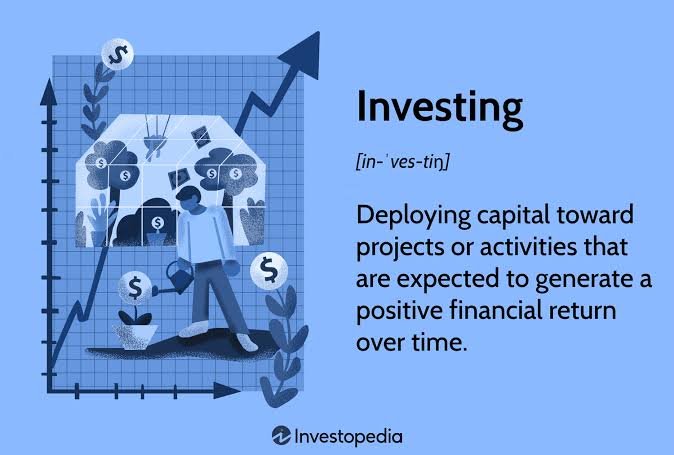
Investing is the process of allocating money into assets with the expectation of generating income, profit, or capital appreciation over time. It is one of the most effective ways to build wealth and achieve long-term financial goals.
Investments come in many forms, including stocks, bonds, mutual funds, exchange-traded funds (ETFs), real estate, and cryptocurrencies. Each investment type has unique characteristics, risks, and potential returns. Stocks represent ownership in a company, while bonds are loans made to governments or corporations. Mutual funds and ETFs provide diversified exposure to multiple assets through a single investment.
A fundamental concept in investing is the relationship between risk and return. Generally, investments with higher potential returns carry greater risks. Investors must assess their financial goals, risk tolerance, and investment horizon before choosing suitable investment options.
Diversification is a key investment strategy. By spreading investments across different asset classes, industries, and geographic regions, investors can reduce the impact of poor performance in any single investment. Diversification helps manage risk while maintaining growth potential.
One of the most powerful principles in investing is compound growth.
genui{“finance_economics_learning_block”:{“type_id”:”COMPOUND_INTEREST”,”content”:”FV = PV(1+r)^n”}}
This concept demonstrates how investment earnings can generate additional earnings over time, leading to significant wealth accumulation.
Investing offers several benefits. It helps protect money from inflation, creates opportunities for passive income, and supports long-term objectives such as retirement, education funding, and financial independence. Successful investing often requires patience, discipline, and a long-term perspective.
Modern technology has made investing more accessible than ever. Online brokerage platforms, mobile applications, and automated investment services allow individuals to start investing with relatively small amounts of money.
Despite its advantages, investing carries risks. Market fluctuations, economic downturns, and unexpected events can affect investment values. Therefore, research, planning, and regular portfolio reviews are essential.
Investing is not about getting rich quickly; it is about making informed decisions and allowing time to work in your favor. With proper knowledge and a well-structured strategy, investing can be a powerful tool for building wealth, achieving financial security, and creating future opportunities.










Leave a Reply